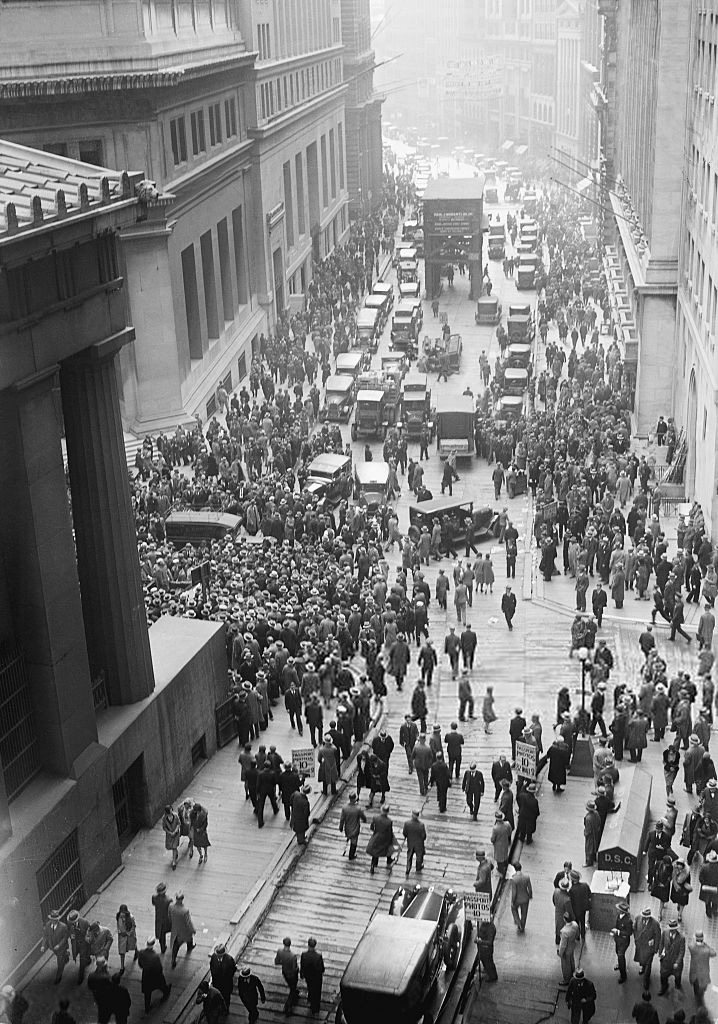
 The Great Depression was a severe worldwide economic downturn that began in 1929 and lasted through much of the 1930s. It is commonly associated with the stock market crash of October 1929 in the United States, but it became a global crisis marked by collapsing production and trade, mass unemployment, widespread bank failures, deflation in many countries, and deep social and political upheaval. The Depression reshaped economic policy, strengthened the case for government intervention in the economy, and helped create conditions that fueled political extremism in several regions.
Causes and contributing factors
Historians and economists generally describe the Great Depression as the result of multiple reinforcing shocks rather than one single cause. Key contributors included:
-
Financial instability and speculative bubbles, especially in the late 1920s
-
Bank failures and credit contraction, which reduced lending and investment
-
Falling consumer demand and industrial overcapacity in some sectors
-
Deflation (falling prices), which increased real debt burdens and discouraged spending
-
International economic linkages, including war debts and reparations after World War I
-
Policy responses that often worsened conditions, such as tight monetary policy and, in many places, trade protectionism (tariffs and import restrictions), which contributed to a sharp decline in global trade
Global spread and impact
Although the crisis began prominently in the U.S. financial system, it spread rapidly through:
-
International capital flows and fragile banking systems
-
Commodity price collapses that harmed export-dependent economies
-
Trade contraction and rising economic nationalism
Effects varied by country, but common outcomes included:
-
Mass unemployment and underemployment
-
Business failures and wage cuts
-
Poverty and homelessness in many urban centers
-
Political instability and declining trust in traditional institutions
Government responses
The Depression drove major experiments in economic policy:
-
In the United States, the New Deal expanded federal programs, financial regulation, and public works to stabilize banks, support employment, and reform markets.
-
Many governments adopted a mix of public spending, banking reforms, and social welfare measures.
-
Some countries moved away from the gold standard, allowing more flexible monetary policy.
-
Approaches differed widely, and recovery timelines were uneven.
Recovery and end
There wasn’t a single global “end date.” Some economies began recovering in the mid-to-late 1930s, while others remained weak until the large-scale mobilization and industrial demand associated with World War II accelerated production and employment.
Legacy
The Great Depression’s lasting influence includes:
-
Stronger support for macroeconomic management (using fiscal and monetary policy to stabilize economies)
-
Expansion of social safety nets and labor protections in many countries
-
Major reforms in banking and financial regulation
-
A powerful cautionary example of how financial crises, deflation, and policy missteps can reinforce one another—and how economic pain can reshape politics and society